
Week 4: Move More!
Move More!
Week 4 shifts the focus to movement. During Week 1, you recorded your starting daily activity baseline. This week, you will build on that foundation by taking on the Week 4 challenge: 150 minutes of physical activity over seven days.
Reaching 150 minutes does not require hours in a gym or intense training programs. By spreading your time across the week and drawing on everyday rural routines, you can hit this target while adapting movement to your current fitness level and schedule.
The 150-Minute Weekly Goal
Public health guidelines recommend at least 150 minutes of moderate-intensity physical activity each week for meaningful cardiovascular and metabolic health improvements. Regular physical movement helps lower A1C levels, improves insulin sensitivity, assists with blood pressure management, and increases daily energy.
Moderate intensity means moving fast enough to raise your heart rate and breathe faster while still being able to hold a conversation. You can break 150 minutes down into manageable blocks throughout the week:
- 21 minutes per day every day of the week
- 30 minutes per day, 5 days per week
- 50 minutes per day, 3 days per week
- 10 to 15-minute bursts spread throughout each day
Focus on total accumulated time rather than long, exhausting sessions.
Fitting Movement into Rural Life and Diverse Ability Levels
Physical activity includes structured exercise as well as natural, functional movement integrated into your day. Inspired by Blue Zones research—which highlights how long-lived populations move naturally through daily routines—your movement can come directly from home, farm, work, and community activities.
You earn movement points in the Healthy Hive tracker for any sustained physical activity that raises your effort above a sitting baseline.
Regardless of your starting point, honor your body's limits. If you are managing joint pain or recovering from an injury, break your time into short, frequent segments or select seated and low-impact routines.
Structuring Your Weekly Movement Plan
A realistic weekly movement plan maps out specific days, times, and activities while leaving room for unexpected work or weather disruptions. Use the sample 5-day template below to see how different activities combine to meet the 150-minute goal:
Monday:    30 minutes (Brisk morning walk around the property or neighborhood)

Tuesday:   30 minutes (15 mins seated resistance bands + 15 mins active household chores)

Wednesday: Rest or light daily stretching

Thursday:  30 minutes (Community walk, line dancing class, or indoor pacing)

Friday:    30 minutes (15 mins morning walk + 15 mins yard maintenance)

Saturday:  30 minutes (Active outdoor work, gardening, or a longer family walk)

Sunday:    Rest and log weekly points

--------------------------------------------------------------------------------

Total:     150 minutes of accumulated movement
Plan Your Week
Take a few moments to outline your movement schedule for the upcoming week. Write down your target activities and times before starting Week 4:
- Select your schedule: Will you target 30 minutes across 5 days, or smaller 10-minute bursts throughout each day?
- Identify 2 to 3 main activities: Choose actions that match your current ability level, such as walking, chair routines, or functional outdoor work.
- Prepare your tracking: Open your Healthy Hive log to record your active minutes daily as you work toward your 150-minute goal.
- Anthony and Harper Wellness Centers: Don't forget! You have TWO MONTHS free membership to either center!
Rural-Friendly Ways to Move
In traditional longevity hotspots known as Blue Zones, people rarely lift heavy weights or run on treadmills. Instead, they live in environments that prompt natural movement continuously throughout the day. They tend gardens, walk to neighbors' houses, perform household and farm chores, and stay active through everyday routines. This continuous, low-intensity movement keeps joints healthy, aids blood sugar management, and burns energy without requiring formal workout equipment.
By adopting this mindset, you can accumulate movement minutes during your regular daily activities. Rather than treating exercise as an intimidating task that requires an hour at a gym, you can weave physical activity directly into your home, work, and social life.
Moving naturally throughout the day lowers blood sugar spikes and supports steady long-term energy.
Six Rural-Friendly Ways to Earn Movement Minutes
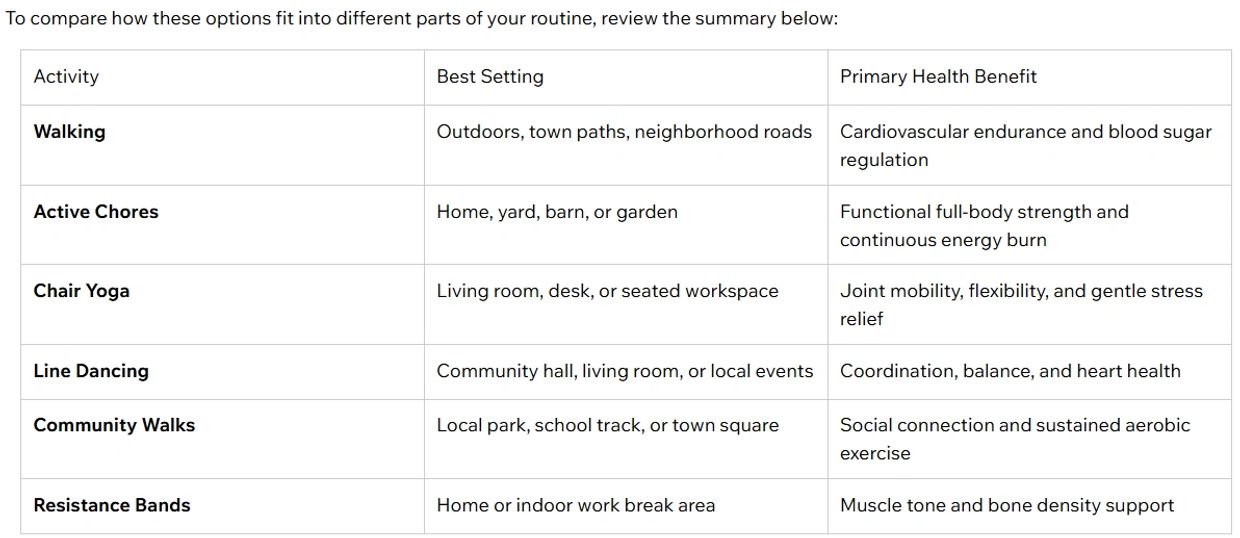
Rural living provides abundant opportunities to stay active without a gym membership. You can mix and match these six practical activities to build your weekly total:
- Walking: A foundational activity that requires no special gear beyond comfortable shoes. You can walk around your property, along country roads, or during work breaks.
- Active Chores: Vacuuming, sweeping, raking leaves, gardening, stacking wood, and tending livestock all raise your heart rate and build functional strength.
- Chair Yoga: Ideal for desk work, television time, or reduced mobility. Seated stretches and twists improve joint flexibility and core stability without placing stress on lower-body joints.
- Line Dancing: An energetic way to build cardiovascular endurance, balance, and coordination while enjoying music alone or with others.
- Community Walks: Group walks down local paths or through town offer physical activity alongside social connection, making time pass quickly.
- Resistance Bands: Lightweight, portable, and inexpensive bands allow you to perform strength exercises anywhere, from your living room to your workplace.
Matching Movement Options to Your Schedule and Environment
To reach your weekly goal of 150 minutes, match your chosen activities to your daily schedule rather than forcing a rigid routine. Dividing your goal into smaller daily blocks makes physical activity manageable regardless of your work hours or home responsibilities.
Morning Routines
Start your day with 10 minutes of light stretching or resistance band work before breakfast. If you care for animals or maintain a garden, complete those active chores early in the morning when temperatures are cool.
Workday Adjustments
If your job involves sitting at a desk or driving long distances, schedule short movement breaks every hour. Perform seated leg lifts or chair yoga twists between tasks. If you perform manual labor, use breaks for gentle stretching to keep muscles flexible and reduce fatigue.
Evening Routines
Replace passive sitting time with natural movement. Take a 15-minute walk after dinner to assist digestion and steady post-meal blood sugar levels. On weekends or open evenings, join a line dancing group or meet community members for a stroll.
To track your effort accurately, log every block of physical activity that lasts at least 10 minutes. Combining 15 minutes of house chores in the morning, a 15-minute lunchtime walk, and a 15-minute evening stroll yields 45 minutes toward your weekly goal in a single day.
Daily Movement Selection Guide
Use this reference to choose an activity based on your available time and energy:
- If you have 5 to 10 minutes indoors: Do a quick chair yoga routine or perform upper-body exercises with a resistance band.
- If you have 15 to 30 minutes at home: Complete active yard work, garden maintenance, or vacuuming and scrubbing floors.
- If you want a social activity: Reach out to a neighbor for a walk or join a local line dancing group.
- If you need low-impact exercise: Choose seated stretches, gentle flat-surface walking, or light resistance band routines.
Hive Walk
Reaching the 150-minute movement milestone for Week 4 is as much about community support as it is about personal effort. The Walk the Hive evening walks bring the Healthy Hive group together in person, giving you a safe, encouraging space to log your exercise minutes, meet your neighbors, and build lasting active habits across Harper County.
Safe Participation and Preparation
Walking outdoors in rural spaces requires basic safety preparations, especially when moving in groups along county roads or local paths during evening hours.
- Wear High-Visibility Gear: Evening light fades quickly. Put on bright clothing or a reflective vest, and carry a small flashlight or headlamp so drivers can spot you easily.
- Choose the Right Footwear: Wear supportive sneakers or walking shoes with non-slip treads to handle uneven pavement, gravel, or dirt trails safely.
- Hydrate Before and After: Keep up the hydration habits practiced in Week 2. Carry a water bottle, especially on warmer evenings, and drink before you feel thirsty.
- Pace Yourself: Walk at a brisk conversational pace—one where you can comfortably speak to the person next to you without getting out of breath. If you are new to consistent movement, it is completely fine to start slower or take brief rest breaks.
Group Encouragement and the Right Tribe
In the Blue Zones framework, your "Right Tribe" consists of the people who support your long-term health goals. The Walk the Hive evening events are designed around group encouragement rather than competition.
Walking with others makes physical activity feel lighter and creates built-in accountability. When you know neighbors, family members, or coworkers are waiting for you at the trailhead or park, you are much more likely to complete your planned minutes for the day. Use these walks to share meal ideas from Week 3, celebrate drink swaps from Week 2, and encourage group members who are building back up to steady daily movement.
Local Harper County Movement Opportunities
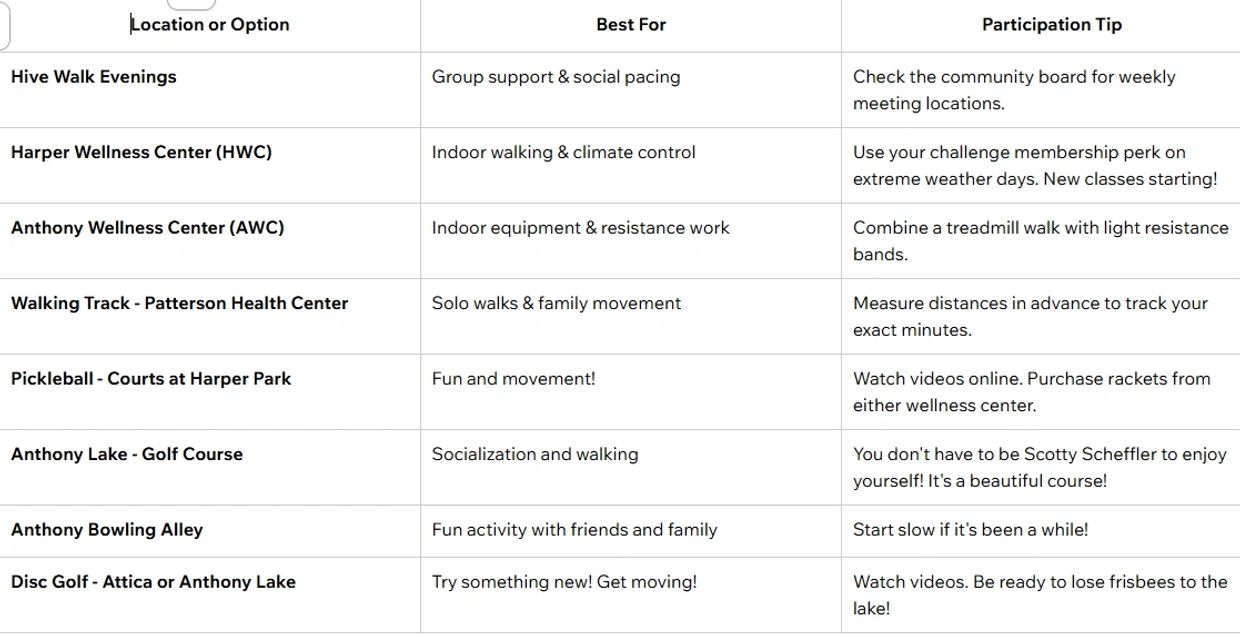
Beyond organized group walks, Harper County offers several accessible spaces to complete your 150-minute weekly goal. Varying your walking locations keeps your routine interesting and helps you move naturally throughout the week.
Logging Movement Points
Every minute of intentional activity counts toward your weekly Healthy Hive total. To hit your 150-minute target by the end of Week 4, aim to log your time using a simple daily breakdown.
Daily Target = 150 total minutes / 5 days = 30 minutes per day

Alternate Option = 150 total minutes / 7 days = ~22 minutes per day

Points = 1 point per 30 minutes of completed movement
Record your activity minutes and exercise points on the Healthy Hive portal or your daily tracking sheet every night. Whether your minutes come from Walk the Hive group events, daily household chores, line dancing, or indoor laps at the wellness centers, every session moves your numbers in the right direction as you prepare for Week 5.