
Week 5: Smart Snacking
In Week 2, you learned how whole foods, lean proteins, and fiber keep your blood sugar steady during meals. However, the hours between breakfast, lunch, and dinner present a different challenge. Afternoon energy slumps, busy work schedules, and evening relaxation are the precise moments when added sugar and ultra-processed foods often re-enter your day.
Snacking is not inherently bad. When approached with intention, a snack serves as a helpful bridge between meals to maintain energy and prevent overeating later. The key is understanding how different snack choices affect your body and recognizing the specific role snacking plays in your daily pattern.
How Processed Snacks Impact Blood Sugar
Many convenience snacks, such as chips, crackers, pastries, and candy bars, consist primarily of refined carbohydrates and added sugars. These ingredients are rapidly digested and absorbed into your bloodstream. This creates a quick rise in blood glucose, followed by a surge of insulin to bring those levels back down.
This rapid drop in blood sugar often leaves you feeling tired, irritable, and hungry again shortly after eating. The body then craves another quick source of energy, creating a continuous cycle of spiking and crashing blood sugar throughout the day.
Identifying Your Snacking Triggers
Building a smarter snacking habit starts with paying attention to when and why you reach for food between meals. Not all snacking is driven by physical hunger. Environmental cues, stress, and routine play major roles in daily choices.
- Physical Hunger: A genuine need for fuel marked by a growling stomach or low energy hours after a balanced meal.
- Habitual Snacking: Reaching for food out of routine, such as grabbing a treat whenever you sit down to watch television or start a driving route.
- Emotional or Stress Snacking: Seeking comfort, relief, or a temporary distraction during stressful or boring moments at work or home.
Recognizing these triggers allows you to make conscious decisions. If you are truly hungry, a nutrient-dense snack will nourish your body. If you are responding to stress or boredom, taking a brief walk or drinking a glass of water may address the real need without spiking your blood sugar.
Setting Up Your Week 5 Strategy
This week is dedicated to shifting away from convenience foods that contain hidden sugars and refined starches. Rather than eliminating snacks altogether, the goal is to swap empty calories for options that actively support your A1C and wellness goals.
Over the next few days, you will learn how pairing specific nutrients keeps you full longer and how to manage sugar cravings without feeling restricted. Start by observing your current routine today. Notice what snacks are easily accessible in your pantry, workplace, or vehicle, and identify one processed item you can replace with a whole-food alternative.
Don't Forget Eat Real America!
There are some terrific snack recipes!
Plan Your Week
Replacing processed snacks with whole-food options keeps blood sugar stable and prevents afternoon energy crashes.
Protein and Fiber Combinations
When you reach for a snack between meals, choosing single-ingredient refined carbohydrates like crackers, chips, or sweet baked goods causes a rapid spike in blood glucose. Your digestive system breaks down quickly digestible carbohydrates into glucose almost immediately, forcing your pancreas to pump out insulin to bring blood sugar back down. This rapid rise and fall often leaves you feeling hungry, fatigued, and reaching for another snack shortly after.
Combining protein and fiber at snack time changes how your body processes energy, stabilizing blood sugar levels and keeping you full until your next meal.
How Protein and Fiber Control Blood Sugar
Protein and fiber slow down digestion through two distinct physiological mechanisms. When eaten together, they buffer the entry of sugar into your bloodstream and keep your digestive system satisfied.
- Fiber Delays Carbohydrate Breakdown: Soluble fiber absorbs water in your digestive tract, forming a gel-like matrix. This matrix slows the gastric emptying rate—the speed at which food leaves your stomach—and delays the absorption of glucose in the small intestine. Because glucose enters the bloodstream gradually, your blood sugar avoids high spikes.
- Protein Promotes Satiety Hormones: Protein requires more energy and time for your stomach to break down than simple carbohydrates. Furthermore, protein triggers the release of satiety signals, such as peptide YY (PYY) and glucagon-like peptide-1 (GLP-1), which signal your brain that you are full.
Pairing fiber with protein slows gastric emptying, preventing sharp glucose spikes and prolonging satiety between meals.
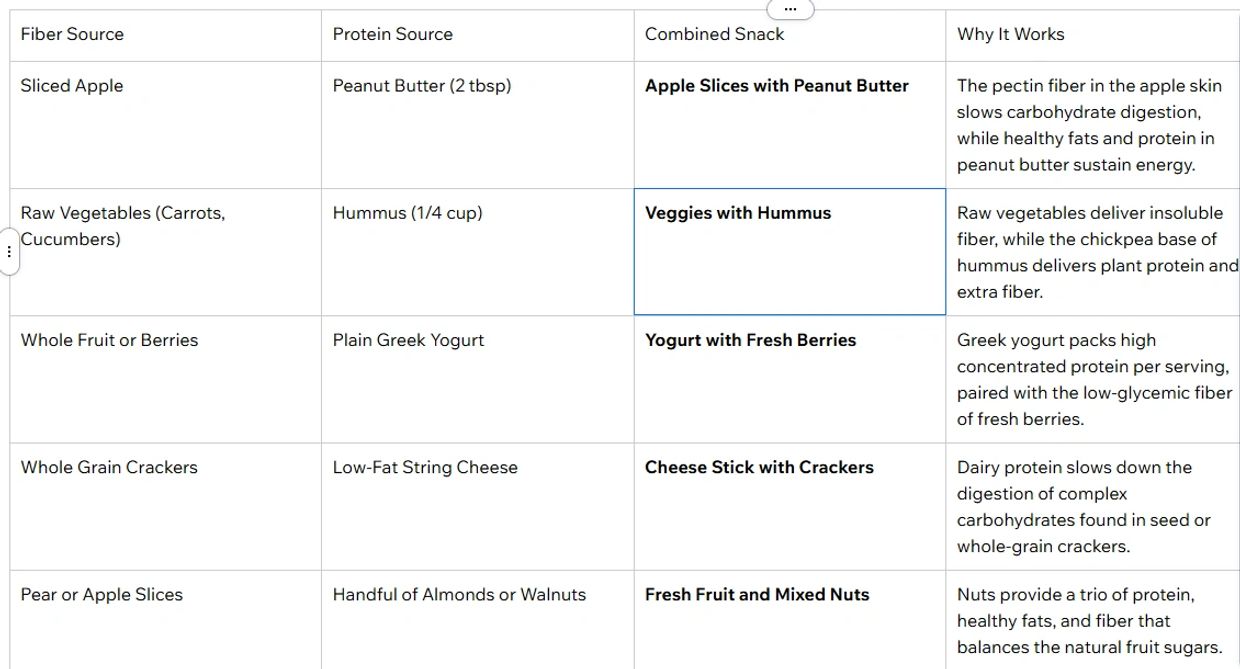
Smart Snack Combinations from the Hive Challenge
Building a balanced snack requires selecting one item rich in fiber and one item high in protein. You do not need complex recipes or hard-to-find ingredients to build these combinations.
Build a Balanced Snack
To build your own combination using foods already in your kitchen, select one item from the fiber column and pair it with one item from the protein column. Aim for snacks that contain roughly 3 to 5 grams of fiber and at least 6 to 10 grams of protein.
High-Fiber Foods
- Fresh fruits with skins (apples, pears, berries)
- Raw vegetables (baby carrots, celery, bell pepper strips, broccoli floret mix)
- High-fiber whole-grain crackers or air-popped popcorn
High-Protein Foods
- Hard-boiled eggs
- Cottage cheese or Greek yogurt
- String cheese or sliced natural cheese
- Nut butters (peanut, almond) or whole raw/roasted nuts
- Canned tuna or roasted chickpeas
Smart Snacking Rule: Never leave a carbohydrate alone. Always pair fruit, whole grains, or starchy vegetables with a quality protein source.
Giving Up Sugar
Reducing sugar and stepping away from highly processed snacks does not require sudden, flawless perfection. When energy dips between meals or a sweet craving hits, the goal is simply making a steady shift toward choices that support your blood sugar and overall energy.
Understanding Cravings and Daily Triggers
Cravings often happen at predictable times, such as mid-afternoon at work or late in the evening while relaxing at home. Recognizing whether a craving stems from true physical hunger or from stress, fatigue, or routine helps you respond intentionally rather than automatically reaching for a sugary snack.
True physical hunger builds gradually and is satisfied by balanced, nourishing foods. In contrast, habit-driven cravings come on suddenly, often demanding quick sugar or refined starches that cause rapid blood sugar spikes and subsequent crashes.
Noticing your daily craving patterns gives you the power to choose a healthier response before hunger takes over.
Planning Ahead for Lower-Sugar Choices
Making lower-sugar choices gets significantly easier when you prepare your environment ahead of time. Keeping nutritious options visible and accessible at home, in the vehicle, or at work removes the friction from choosing well.
- Stock your space: Clear out easily accessible candy bowls or sugary packaged snacks and replace them with ready-to-eat choices like washed raw vegetables, whole fruit, or unflavored nuts.
- Pre-portion snacks: Divide larger bags of nuts, seeds, or whole-grain items into individual portion sizes so you can grab a single serving on busy days.
- Pack portable options: Keep shelf-stable choices in your car, office drawer, or bag so you are never stranded without a nutritious option.
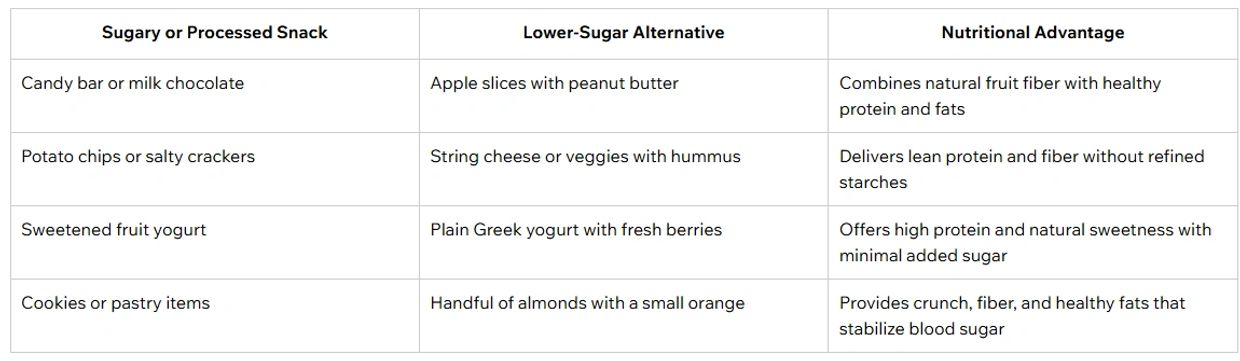
Practical Protein and Fiber Swaps
Pairing fiber with protein keeps blood sugar steady and provides long-lasting fullness. Fiber slows down digestion, while protein supports energy and appetite control, making these combinations ideal for replacing sugary snacks.
Recovering from Setbacks Without Abandoning Your Goals
Eating a sugary snack or having a higher-sugar day is a normal part of building long-term habits. Progress in the Healthy Hive program is not about total perfection; it is about how quickly you pivot back to your supportive routines.
If you eat more sugar than intended, avoid the trap of assuming the whole day or week is off track. Simply acknowledge what triggered the choice, drink a glass of water, and make your very next snack a balanced protein and fiber combination.
A single setback does not undo your progress; focus on making your next choice a healthy one.
CLICK HERE for a 5 minute video to help you get started!