
Week 6: Stress Less
Welcome to Week 6 of the Healthy Hive challenge. Over the past five weeks, you have focused primarily on physical routines: replacing sugary beverages, filling your plate with balanced whole foods, building consistent movement, and choosing smart snacks. These actions lay a powerful foundation for managing blood sugar and lowering your A1C.
This week shifts focus toward the hidden connection between your mind, your nervous system, and your metabolic health. Stress is not just a mental feeling; it creates a direct physiological reaction that can alter your blood sugar levels and undermine your hardest health efforts. By learning how your body responds to strain, you can protect your daily health routines and support long-term metabolic well-being.
How Stress Raises Blood Sugar
When you experience stress—whether from daily busy work, financial worries, family demands, or unexpected disruptions—your body activates its ancient defense system. It releases hormones like cortisol and adrenaline to prepare you to fight or flee from danger. In emergency situations, this response is helpful. However, chronic daily stress keeps these hormones elevated, creating continuous disruptions in your body chemistry.
Cortisol signals your liver to release stored glucose (sugar) directly into your bloodstream to supply quick energy to your muscles. At the same time, cortisol makes your body's tissues less sensitive to insulin, the hormone responsible for moving sugar out of your blood and into your cells. This combination causes circulating blood sugar levels to stay high, even if you haven't eaten high-sugar foods.
Elevated cortisol causes the liver to release extra glucose while simultaneously making cells more resistant to insulin.
Identifying Your Personal Stress Signs
Stress displays clear warnings long before it disrupts your long-term health numbers. Because everyone reacts differently to pressure, identifying your unique early warning signs allows you to step in before stress derails your routine.
Physical Signals
- Tension in the shoulders, neck, or jaw.
- Unexplained headaches or stomach tightness.
- Restless sleep, difficulty falling asleep, or waking up exhausted.
- Sudden spikes or unusual fluctuations in daily blood sugar readings.
Emotional and Mental Signals
- Feeling quickly overwhelmed by minor schedule changes.
- Increased irritability or impatience with family and co-workers.
- Persistent brain fog or difficulty keeping track of daily tasks.
- Loss of motivation to track habits or plan meals.
Behavioral Signals
- Reaching for sugary, highly processed foods between meals.
- Skipping planned walking or movement sessions due to exhaustion.
- Skipping meals entirely or overeating past the point of comfortable fullness.
- Isolating yourself from supportive social connections.
Expanding the Healthy Hive Points System
To support this shift in focus, Week 6 adds social-emotional growth (SEL) directly to your Healthy Hive points tracking. Up to this point, you have logged your daily movement and drink choices. Now, you earn points by intentionally downshifting, managing stress, and connecting with supportive groups.
This addition aligns directly with proven health principles, such as the Blue Zones Downshift practice—taking intentional time each day to slow down, rest, and lower stress hormones—and building a Right Tribe of supportive relationships.
You can now earn daily Healthy Hive points by engaging in simple stress-reduction practices and reaching out to supportive community connections.
By adding social-emotional habits to your weekly point tracking, you build resilience that protects your blood sugar, improves your mood, and reinforces every physical health habit you have built so far.
Stress Sign Check-In
Take a moment to evaluate how stress currently shows up in your day-to-day life. Check any sign you have experienced over the past two weeks:
- Tightness in muscles, neck, shoulders, or jaw
- Waking up feeling tired despite sleeping 7-8 hours
- Intense cravings for high-sugar or high-carb foods when feeling overwhelmed
- Feeling too exhausted to complete planned walking or movement
- Irritability or feeling easily overwhelmed by daily chores
- Blood sugar levels running higher than expected without diet changes
If you checked two or more boxes, stress may be actively affecting your metabolic health and daily routines. In the upcoming lessons this week, you will select simple, practical calming techniques—including deep breathing, journaling, prayer or meditation, and sleep adjustments—to lower your stress response and earn your daily social-emotional growth points.
Bee Calm Relaxation Evening
Managing physical stress through quiet practices like deep breathing and prayer is essential, but long-term emotional resilience depends heavily on the people around you. In the Blue Zones research, the concept of the Right Tribe highlights how your social network directly impacts your health habits, emotional stability, and stress levels. When you surround yourself with individuals who encourage healthy choices and listen without judgment, managing life's daily pressures becomes far more achievable.
The Bee Calm relaxation evening brings the Healthy Hive community together to practice active stress relief in a supportive group setting. Taking time to unwind alongside peers reinforces that self-care is a shared priority rather than an isolated burden. Date for the event will be shared via email and at the first meeting.
Surrounding yourself with supportive peers transforms personal stress management into a shared community habit.
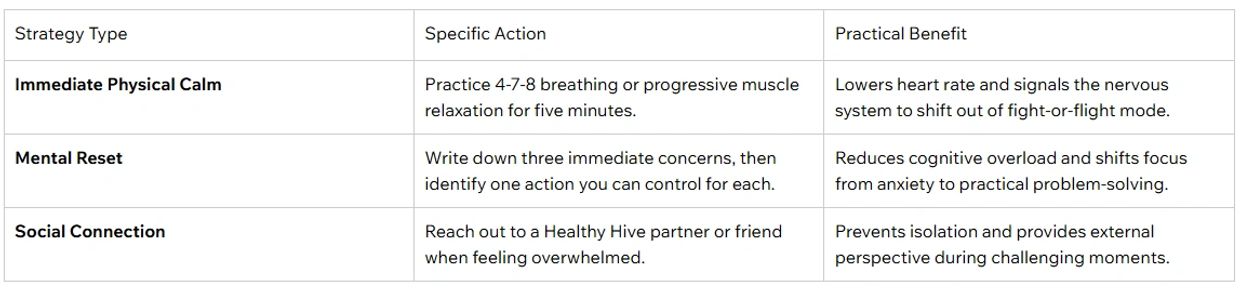
Coping Strategies and Self-Care Ideas
During the Bee Calm relaxation evening, participants practice practical coping mechanisms that can be applied whenever stress threatens to disrupt routine habits like healthy eating or regular movement.
Tracking Social-Emotional Growth Points and Requesting Support
The Healthy Hive program awards points not only for physical movement and healthy eating, but also for social-emotional growth (SEL). Engaging in stress-reduction practices and connecting with your group directly contributes to your weekly goal.
To log your social-emotional growth points and leverage the community effectively:
- Log Daily Practice: Earn points each day you dedicate at least 10 minutes to deep breathing, journaling, prayer, or practicing a coping strategy.
- Participate in Group Discussions: Record points for attending the Bee Calm relaxation evening or posting thoughtful responses on the community discussion board.
- Ask for Support: Post a specific request on the discussion board when facing a hurdle, such as needing an accountability partner for evening walks or tips on managing busy schedules.
- Encourage Hive Members: Respond to at least one peer each week with encouraging feedback or shared ideas to strengthen your Right Tribe.
Asking for help is a sign of proactive health management. Reaching out to your Healthy Hive peers ensures you do not have to navigate health changes alone.